How Do Doctors Decide the Best Uterine Fibroids Treatment?
Wiki Article
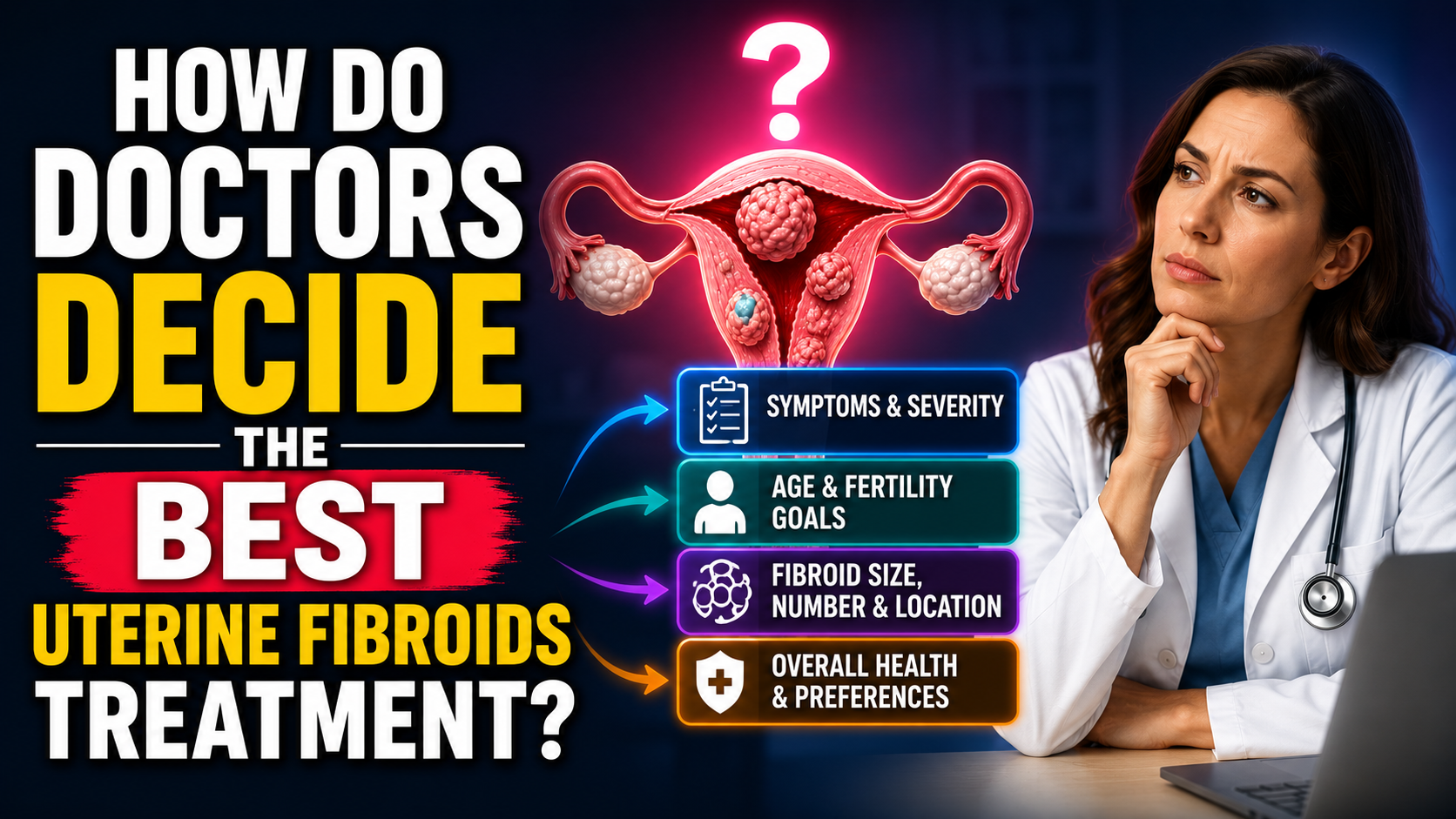
The best uterine fibroids treatment is not determined by fibroid size alone. Doctors evaluate symptoms, the number and location of fibroids, future pregnancy plans, overall health, and imaging findings before recommending a treatment plan. The goal is to provide the most effective treatment while preserving the patient's quality of life and, when appropriate, the uterus.
Many women assume that every fibroid requires surgery or that one treatment works for everyone. In reality, uterine fibroids vary greatly in size, location, and the symptoms they cause. Two women with similar-sized fibroids may receive completely different treatment recommendations because their medical needs and personal goals are different. Understanding how doctors choose uterine fibroids treatment helps patients make informed decisions and understand why personalized care is so important.
Why Is Every Fibroid Different?
Uterine fibroids are non-cancerous growths that develop from the muscular wall of the uterus.
They differ in:
Size
Number
Location
Growth pattern
Some women have a single fibroid, while others develop multiple fibroids throughout the uterus.
According to the American College of Obstetricians and Gynecologists (ACOG), many women have fibroids without experiencing symptoms, while others develop significant bleeding or pelvic pressure.
Because every case is unique, treatment must also be individualized.
Why Are Symptoms the First Consideration?
Doctors often begin by understanding how fibroids affect daily life.
Important symptoms include:
Heavy menstrual bleeding
Pelvic pressure
Pelvic pain
Frequent urination
Constipation
Fatigue related to heavy bleeding
Some women have large fibroids with few symptoms, while others experience severe bleeding from relatively small fibroids.
For this reason, symptom severity often plays a greater role than fibroid size alone.
Does Fibroid Location Affect Treatment?
Yes.
The location of a fibroid may influence both symptoms and treatment choices.
Fibroids growing inside the uterine cavity are more likely to cause heavy menstrual bleeding.
Fibroids located on the outside of the uterus may produce pressure on nearby organs such as the bladder or bowel.
The position of the fibroid helps doctors determine which treatment is most appropriate.
Why Is Imaging So Important?
Imaging allows doctors to understand exactly what is happening inside the uterus.
Pelvic ultrasound is usually the first investigation.
It helps identify:
Fibroid size
Number of fibroids
Location within the uterus
When additional detail is required, Magnetic Resonance Imaging (MRI) may be recommended.
MRI provides detailed images that help doctors evaluate complex fibroids and determine whether minimally invasive procedures are appropriate.
Accurate imaging is one of the most important steps in treatment planning.
How Do Fertility Goals Influence Treatment?
Future pregnancy plans are a major part of decision-making.
Doctors discuss whether a woman:
Wishes to become pregnant
Has completed her family
Wants to preserve the uterus
These considerations influence which treatments are most suitable.
A treatment recommended for one patient may not be the best choice for another with different reproductive goals.
Individualized planning helps balance symptom relief with future fertility considerations whenever possible.
Does Fibroid Size Always Determine Treatment?
No.
Although larger fibroids may produce more pressure-related symptoms, size alone does not determine the best treatment.
Doctors also evaluate:
Symptom severity
Fibroid location
Number of fibroids
Overall uterine anatomy
General health
A smaller fibroid causing heavy bleeding may require treatment, while a larger fibroid causing no symptoms may only need regular monitoring.
The overall clinical picture is always more important than size alone.
What Treatment Options May Be Considered?
Treatment recommendations depend on the individual patient.
Possible options include:
Observation with regular follow-up
Medication to manage symptoms
Uterine Fibroid Embolization (UFE)
Myomectomy
Hysterectomy
One minimally invasive option is Uterine Fibroid Embolization, which works by blocking the blood supply feeding the fibroids. As blood flow decreases, the fibroids gradually shrink while the uterus is preserved.
The most appropriate option depends on each woman's clinical findings and personal goals.
Why Is Overall Health Part of the Decision?
Doctors also consider the patient's overall medical condition.
Factors may include:
Age
General health
Previous pelvic surgery
Other medical conditions
Current medications
These factors help determine which treatment offers the safest and most effective outcome.
The objective is to recommend an option that fits both the patient's health and her treatment priorities.
Conclusion
Doctors choose the best uterine fibroids treatment by considering far more than fibroid size. Symptoms, fibroid location, imaging findings, reproductive goals, and overall health all play important roles in creating a personalized treatment plan. Rather than recommending the same approach for every patient, modern fibroid care focuses on selecting the option that best matches the woman's individual needs.
An early evaluation helps identify the most appropriate management strategy before symptoms begin affecting daily life more significantly. Those interested in learning more about uterus-preserving treatment options can consult an interventional radiologist Jaipur and better understand the available approaches to fibroid care
Frequently Asked Questions
Does every uterine fibroid require treatment?
No. Many fibroids that cause no symptoms can be safely monitored with regular follow-up.
Can treatment be chosen based only on fibroid size?
No. Symptoms, fibroid location, fertility goals, and overall health are equally important factors when deciding the best treatment.
Is Uterine Fibroid Embolization suitable for every woman?
Not always. Suitability depends on the patient's symptoms, imaging findings, reproductive goals, and overall medical evaluation.
Report this wiki page